Modern farmhouses have been a home design trend for several years now. From Modern French Farmhouses to Modern Ranch Farmhouses, there are several different attributes that sub-qualify this simplistic style. When designing your dream home in the farmhouse style, the roof design plays a major role in the overall aesthetic and architecture. From the roof color, to the material, to the peaks and valleys, to the overhangs and patio roofs, here are a few go-to tips to make sure your home is perfectly “farmhousy”.
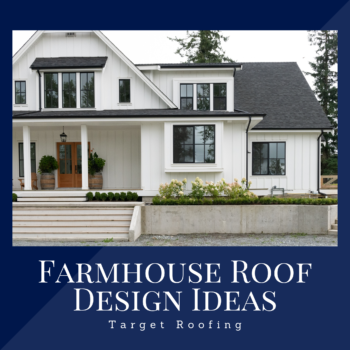
To achieve the modern farmhouse look – black and white exterior paint is a must. The contemporary take on the timeless farmhouse style requires high contrast. Shades of gray and natural wood accents are also essential style qualifiers.
Tin Roof
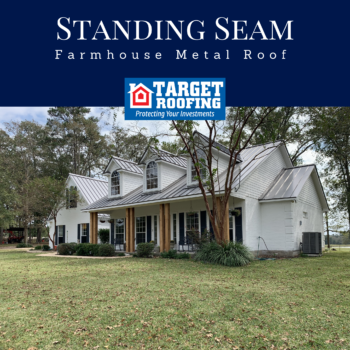
A few of the current trends we are seeing combine the best of both modern and farmhouse designs with modern walkways, flat roofs, and steeper farmhouse structures. The clean and simple appeal of a standing seam metal roof makes it a preferred style among modern farmhouse metal roofs.
Popular standing seam panel finish styles are Galvalume, Galvanized, bright red, dark grey, and dark brown or black.
Metal Roof Corrugated Panels
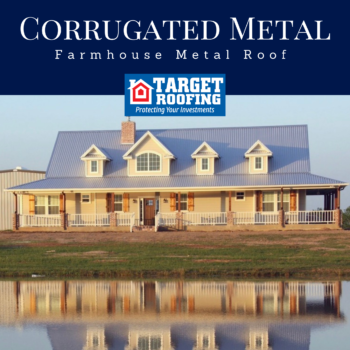
Corrugated panels have been a staple on farmhouse roofs in the landscape of the U.S. for a hundred years due to their durability. No matter the damage from the climate – be it storms, heat, wind, or snow – consistent corrugation helps hide small imperfections over time. Corrugated is its own profile, but many times people are referring to any of the exposed fastener panels that have consistent corrugations such as R-panels (PBR), U-panels (PBU) or Classic Rib AG. We have also done a corrugated style called 5B or 5B Crimp.
Popular corrugated finishes include galvalume and black.
Composition Shingle Roof
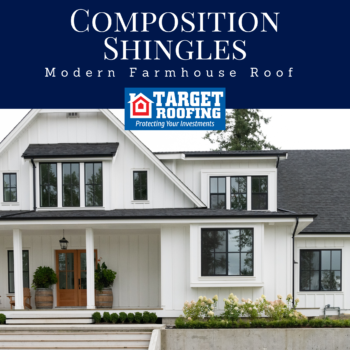
The popularity of modern farmhouse design styles has brought with it a demand for metal roofs. Although metal roofing can be a more expensive material, it is more eco-friendly, durable, and has a much longer lifespan than a shingle roof. To be more budget-friendly with your modern farmhouse dream home, repeat the theme of “high contrast” that is signature to the look by using both shingles and a metal roof on the home – the “combo roof”.
Popular shingle colors include black, dark gray, and a light brown to reflect a natural wood color.
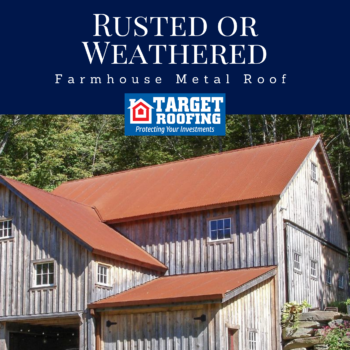
Rusted or Weathered Metal Roof
Pre-weathered galvanized roofs give you the “old” or “vintage” style. Over time any metal colors or materials will fade, weather, and or rust. Many people want to achieve this look when building a new home or installing a new roof. Different manufacturers have created a number of products to mimic these vintage effects on brand new material to save you a few years.
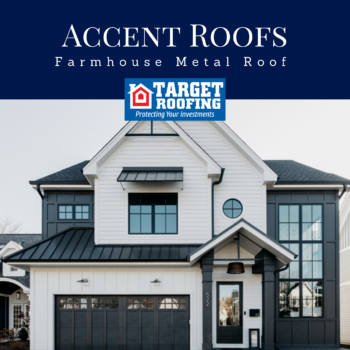
Accent Roofs
The front porch is the main feature of a modern farmhouse. Covered front porches were originally designed as a resting place to keep an eye on the animals and land. Accent roofs were added rather than using the same standing seam panels over the entire house, choose a different material for your patio roof, like corrugated metal or copper, to add the signature contrasting modern look.
Adding a steeply sloped front porch roof helps your home earn the “modern” term in “Modern Farmhouse.” Having a steep slope helps with rain water and snow and decreases the likelihood of roof leaks. Choosing a metal roof on your modern farmhouse patio is a style we see most, in particular standing seam in grey or black metal.
You want to create a front patio space that feels inviting, natural, and relaxed. Choose a natural wood for the flooring and ceiling of the space, and either black or white columns for high contrast.
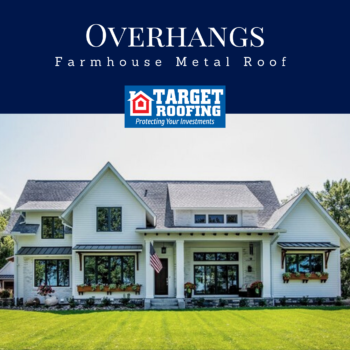
Overhangs
You might consider adding an overhang above your garage as both an aesthetic and functional design element for your modern farmhouse. Adding overhangs sets your home apart and makes the exterior more unique. There are several options to choose from as far as the roofing material – copper is seen more in “French Farmhouse” styles, and using copper metal roofing on accent pieces like this is a great way to get the look while saving money. You might also just want to use metal roofing in the same way in either grey or black. Overhangs help keep water from running down your wood paneling and causing the paint to fade or leak issues.