To Repair or Replace? These are a few signs you may be able to tell for yourself. The Target Roofing Team is always happy to inspect and to identify honestly when it’s time to invest in a roof replacement. Here are a few signs that it’s time to check on your roof status.
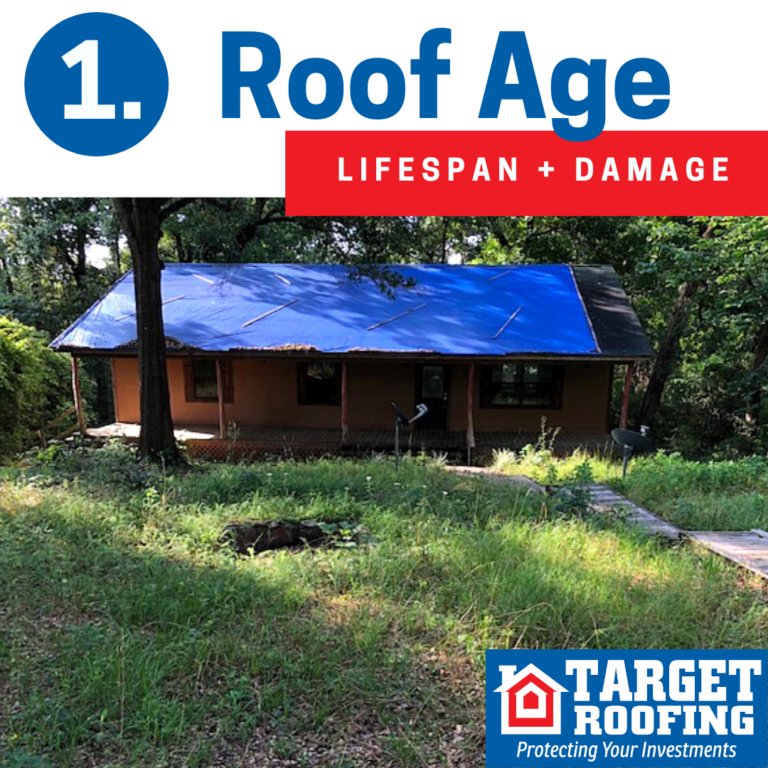
1. AGE
If it’s been over 15 years, it’s time to call Target Roofing for an evaluation. Expected lifespan of roofing materials isn’t enough to trust unchecked. Variations in maintenance, ventilation, and other factors can impact lifespan, so it’s important not to lock into a specific number of years.
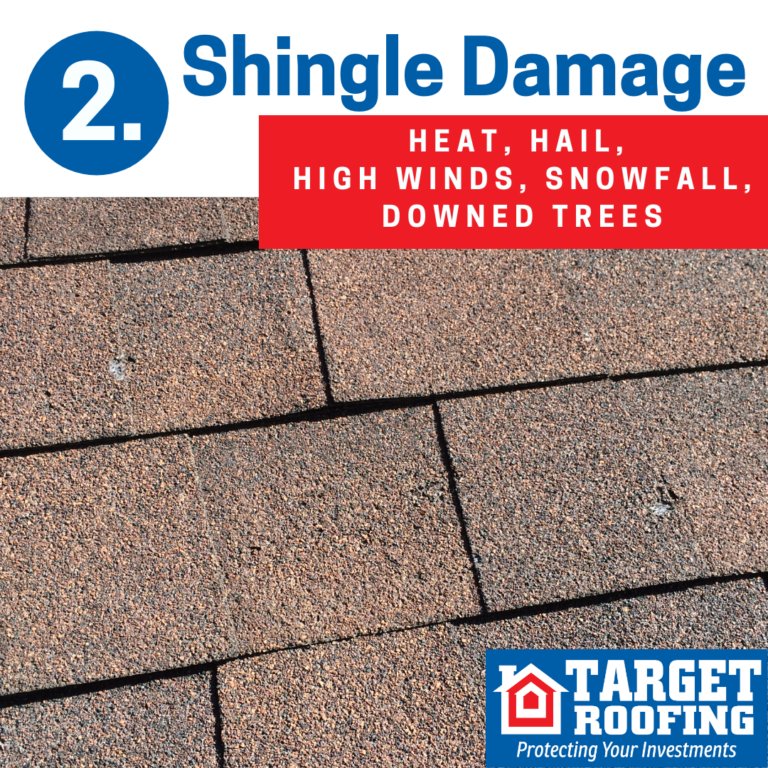
2. SHINGLE DAMAGE
Heat, hail, high winds, snow fall, and downed trees can damage the shingles on your roof, leading to cracks and leaks. On a small scale, repairs can keep moisture out. But if there’s extensive damage, you may need to invest in a roof replacement.
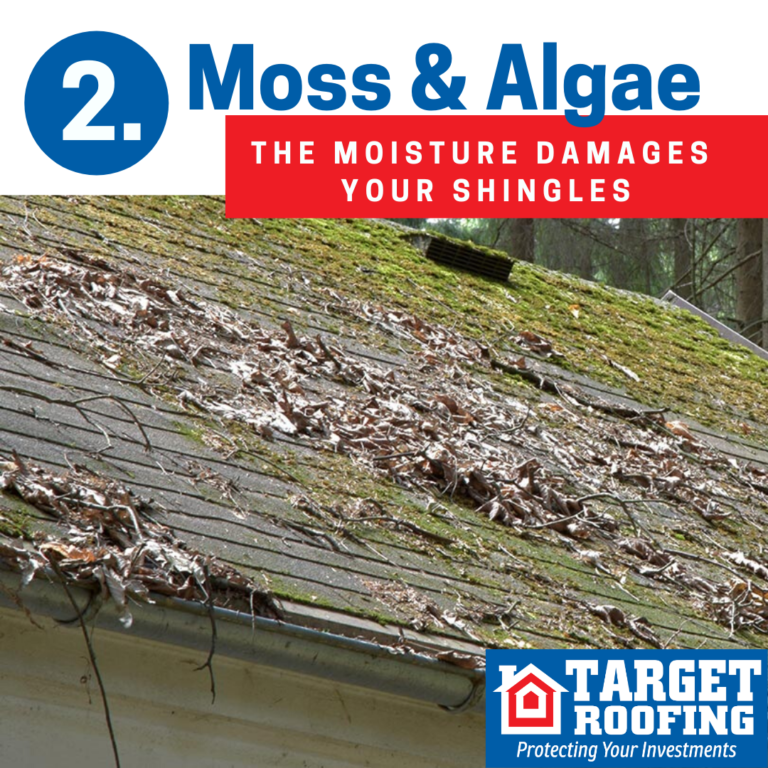
3. MOSS & ALGAE
Moss and algae buildup on your roof can be more than just a cosmetic problem—it can point to a serious moisture issue. If you notice moss or algae building up on your roof, be sure to contact a licensed roofer to fully inspect the problem. Most importantly, don’t try to power wash the growth off—you’ll do more damage to the roof.
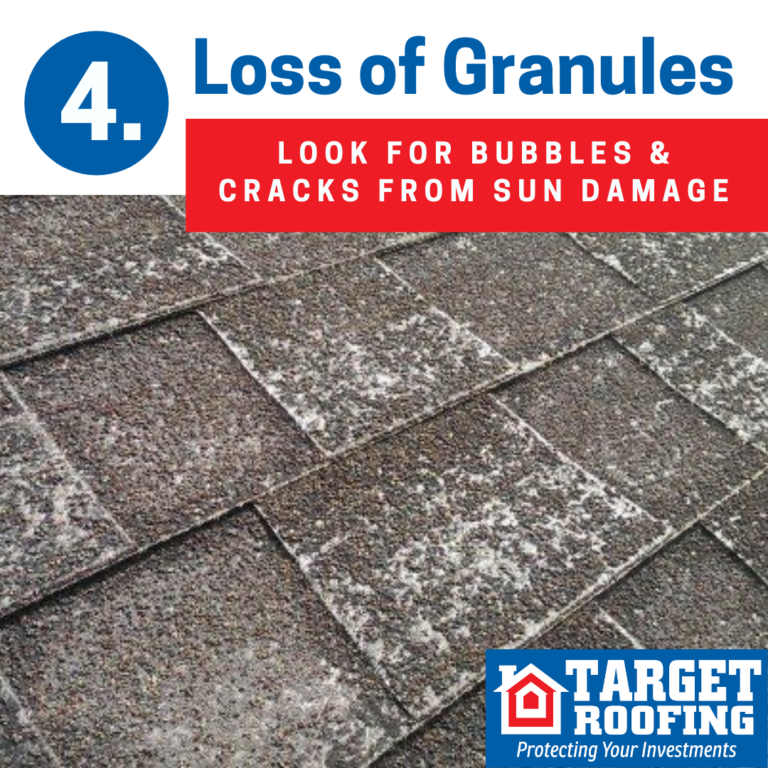
4. LOSS OF GRANULES
If you have an asphalt roof, the shingles are coated in granules to protect against damage from the sun. When the granules wear off, shingles take too much heat from the sun and can start to bubble/crack. Finding granules in your gutters or scattered on the roof can be a sign that it’s time for a replacement. Keep in mind that a brand-new roof will have loose granules. This is more applicable for mid-life roofs.
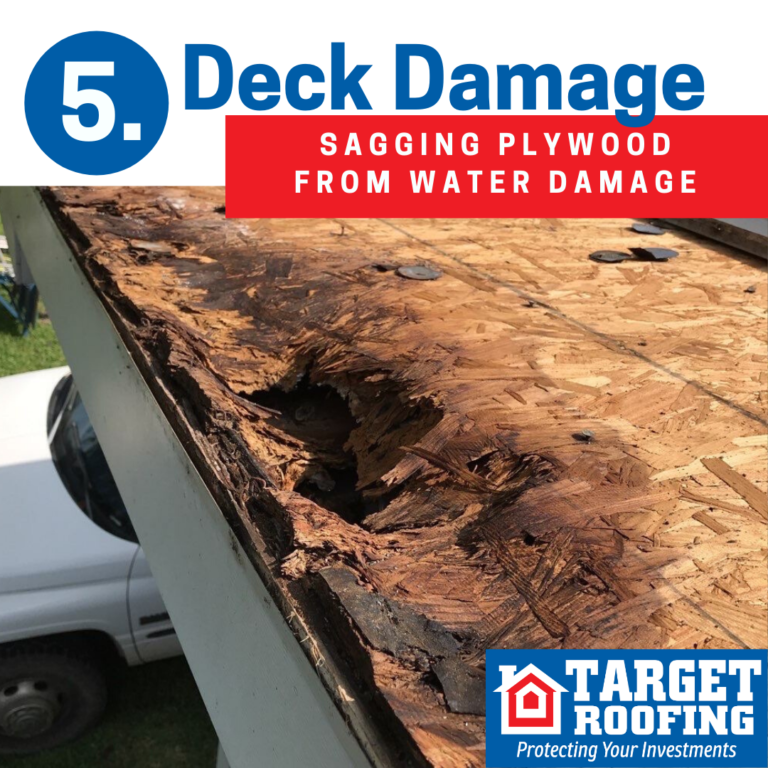
5. DECK DAMAGE
Roofing isn’t all about shingles. The deck of plywood and/or substrate that keep your roof intact is also important. If you see plywood sagging or showing signs of water damage, it is time to replace your roof.
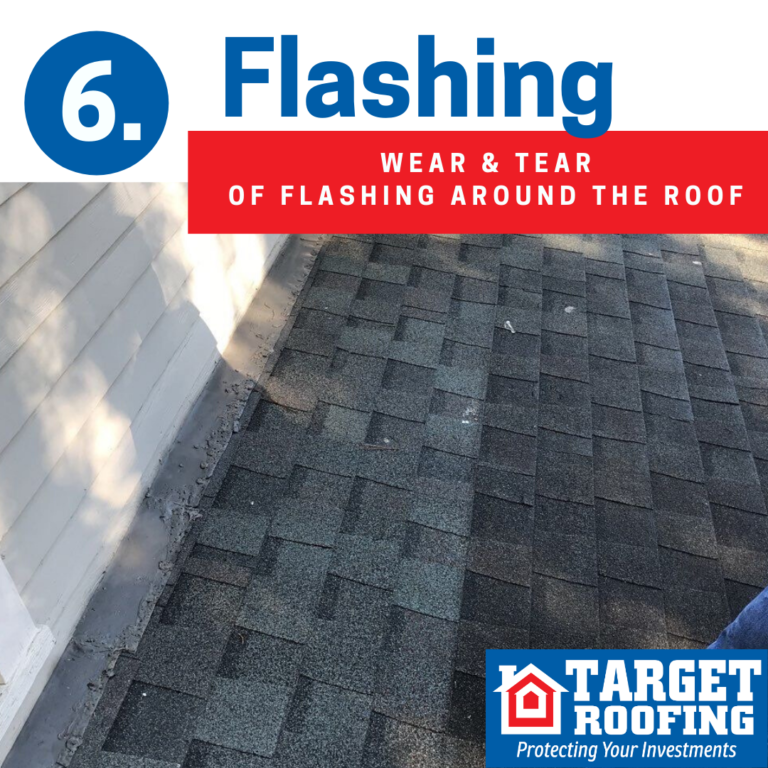
6. WEAR & TEAR OF FLASHING
Another aspect of your roof you should play close attention to are the flashings around vents, chimneys and other penetrations on the roof. These materials can break down over time, leaving your home vulnerable to the elements.
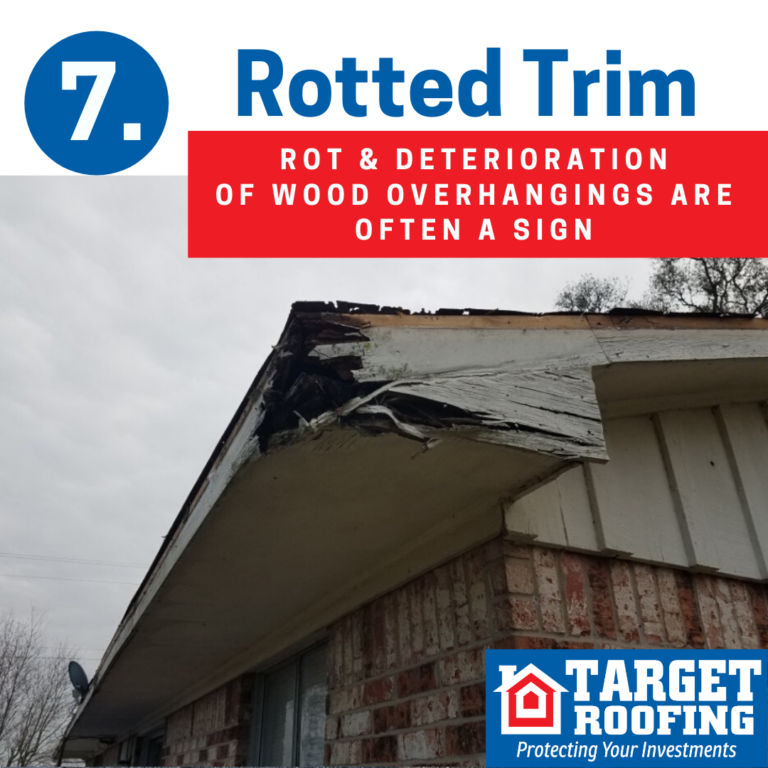
7. ROTTED FASCIA OR SOFFIT
Another tell-tale sign of roof deterioration is visible damage to the wooden overhangs or trim around your roof. The rot and damage are often the cause of leaks.
Contact Us for a No-Cost Estimate!
Contact us today and one of our friendly staff will be in touch with you to help you get what you need!
Lorem ipsum dolor sit amet, consectetur adipiscing elit. Ut elit tellus, luctus nec ullamcorper mattis, pulvinar dapibus leo.
Lorem ipsum dolor sit amet, consectetur adipiscing elit. Ut elit tellus, luctus nec ullamcorper mattis, pulvinar dapibus leo.
Lorem ipsum dolor sit amet, consectetur adipiscing elit. Ut elit tellus, luctus nec ullamcorper mattis, pulvinar dapibus leo.